Pía Llanos

NotCo Ecommerce

Role: UX/UI Designer (Design Lead)

Duration: 3 months

Platform: Shopify

Collaboration: Marketing Lead, Ecommerce Specialist, External Development Agency
 

An illustrative sketch of a flower

Transforming a growing product catalogue into a scalable, category-driven ecommerce system that reinforced brand clarity and maximized product visibility.

Redesigning and structuring NotCo’s ecommerce platform to support portfolio growth, improve navigation clarity and align the digital channel with brand standards.


Transforming a growing product catalogue into a scalable, category-driven ecommerce system that reinforced brand clarity and maximized product visibility.

The Structural Problem

Growth without structure creates friction.


As the product portfolio expanded, the main navigation became saturated and visually compressed.

The homepage functioned as a long, unstructured scroll, reducing clarity and scalability.


Despite strong product design and significant marketing investment, the ecommerce experience lacked cohesion and hierarchy.
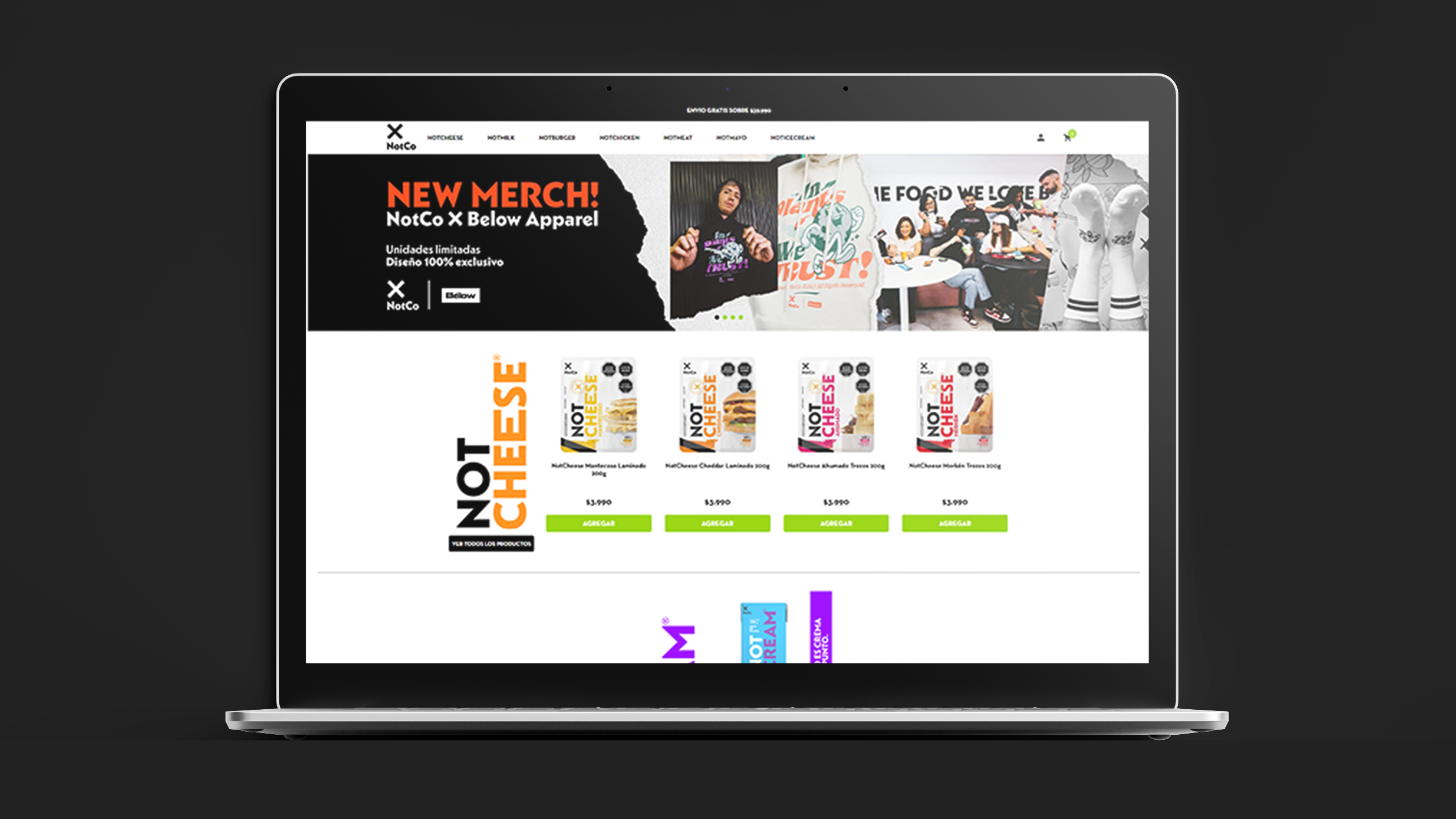
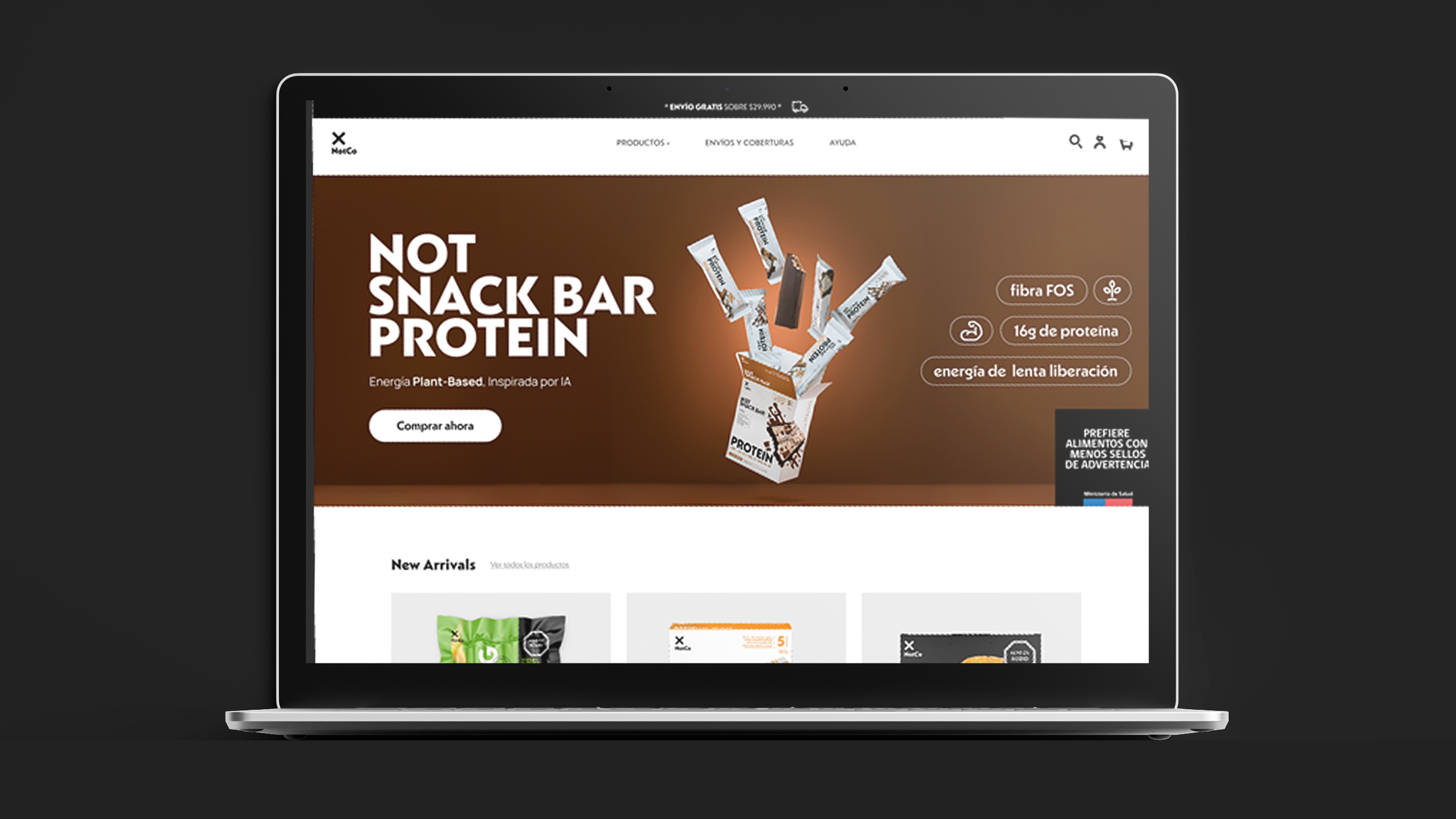
Before: Old crowded menu.

Long homepage.


After: New structured layout.

The Structural Problem

Designing a scalable ecommerce system.


A consistent component framework was introduced to ensure visual coherence and adaptability within Shopify’s constraints.


Key elements:


– Modular category sections

– Standardized product card

– Clear CTA hierarchy

– Unified typography system

– Structured grid for scalability


The system was designed to support continuous portfolio growth.

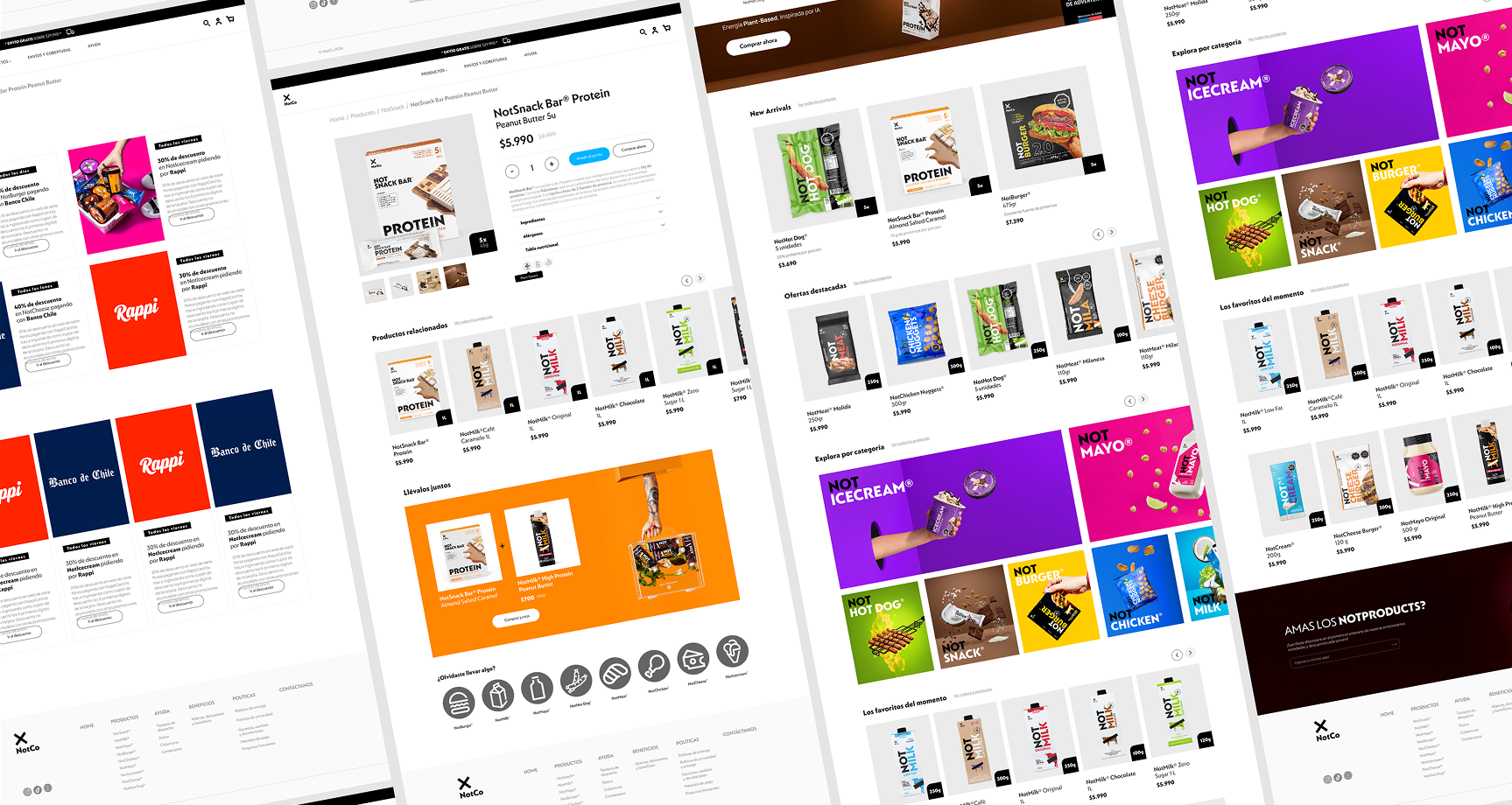
Image of an ecommerce design

The Structural Problem

Designing within real constraints.


The ecommerce migration was implemented by a specialized development agency.


My role focused on defining the structural and visual system, ensuring feasibility within Shopify’s ecosystem and collaborating during handoff to preserve design integrity.


The project required securing stakeholder alignment around structural improvements rather than incremental visual updates.

The Structural Problem

Building a foundation for iteration.


Due to timeline constraints, the focus was on launching a functional, scalable system.


Given additional time, the next phase would include structured usability testing, deeper A/B validation and enhanced filtering logic.


The redesign established a stable foundation for continuous optimization.

Pía Llanos

NotCo Ecommerce

Role: UX/UI Designer (Design Lead)

Duration: 3 months

Platform: Shopify

Collaboration: Marketing Lead, Ecommerce Specialist, External Development Agency


An illustrative sketch of a flower

Transforming a growing product catalogue into a scalable, category-driven ecommerce system that reinforced brand clarity and maximized product visibility.

Redesigning and structuring NotCo’s ecommerce platform to support portfolio growth, improve navigation clarity and align the digital channel with brand standards.


Transforming a growing product catalogue into a scalable, category-driven ecommerce system that reinforced brand clarity and maximized product visibility.

The Structural Problem

Growth without structure creates friction.


As the product portfolio expanded, the main navigation became saturated and visually compressed.

The homepage functioned as a long, unstructured scroll, reducing clarity and scalability.


Despite strong product design and significant marketing investment, the ecommerce experience lacked cohesion and hierarchy.
Before: Old crowded menu.

Long homepage.


After: New structured layout.

Strategic Shift

Designing a scalable ecommerce system.


A consistent component framework was introduced to ensure visual coherence and adaptability within Shopify’s constraints.


Key elements:


– Modular category sections

– Standardized product card

– Clear CTA hierarchy

– Unified typography system

– Structured grid for scalability


The system was designed to support continuous portfolio growth.

Image of an ecommerce design

Designing within real constraints.


The ecommerce migration was implemented by a specialized development agency.


My role focused on defining the structural and visual system, ensuring feasibility within Shopify’s ecosystem and collaborating during handoff to preserve design integrity.


The project required securing stakeholder alignment around structural improvements rather than incremental visual updates.

Trade-offs & Reflection

Building a foundation for iteration.


Due to timeline constraints, the focus was on launching a functional, scalable system.


Given additional time, the next phase would include structured usability testing, deeper A/B validation and enhanced filtering logic.


The redesign established a stable foundation for continuous optimization.

image of an ecommerce zoomed

NotCo Ecommerce

Role: UX/UI Designer (Design Lead)

Duration: 3 months

Platform: Shopify

Collaboration: Marketing Lead, Ecommerce Specialist, External Development Agency


Transforming a growing product catalogue into a scalable, category-driven ecommerce system that reinforced brand clarity and maximized product visibility.

Redesigning and structuring NotCo’s ecommerce platform to support portfolio growth, improve navigation clarity and align the digital channel with brand standards.


Transforming a growing product catalogue into a scalable, category-driven ecommerce system that reinforced brand clarity and maximized product visibility.

An illustrative sketch of a flower

The Structural Problem

Growth without structure creates friction.


As the product portfolio expanded, the main navigation became saturated and visually compressed.

The homepage functioned as a long, unstructured scroll, reducing clarity and scalability.


Despite strong product design and significant marketing investment, the ecommerce experience lacked cohesion and hierarchy.

Before: Old crowded menu.

Long homepage.


After: New structured layout.

Strategic Shift

Designing a scalable ecommerce system.


A consistent component framework was introduced to ensure visual coherence and adaptability within Shopify’s constraints.


Key elements:


  • Modular category sections
  • Standardized product card
  • Clear CTA hierarchy
  • Unified typography system
  • Structured grid for scalability


The system was designed to support continuous portfolio growth.

Image of an ecommerce design

Implementation & Collaboration

Designing within real constraints.


The ecommerce migration was implemented by a specialized development agency.


My role focused on defining the structural and visual system, ensuring feasibility within Shopify’s ecosystem and collaborating during handoff to preserve design integrity.


The project required securing stakeholder alignment around structural improvements rather than incremental visual updates.

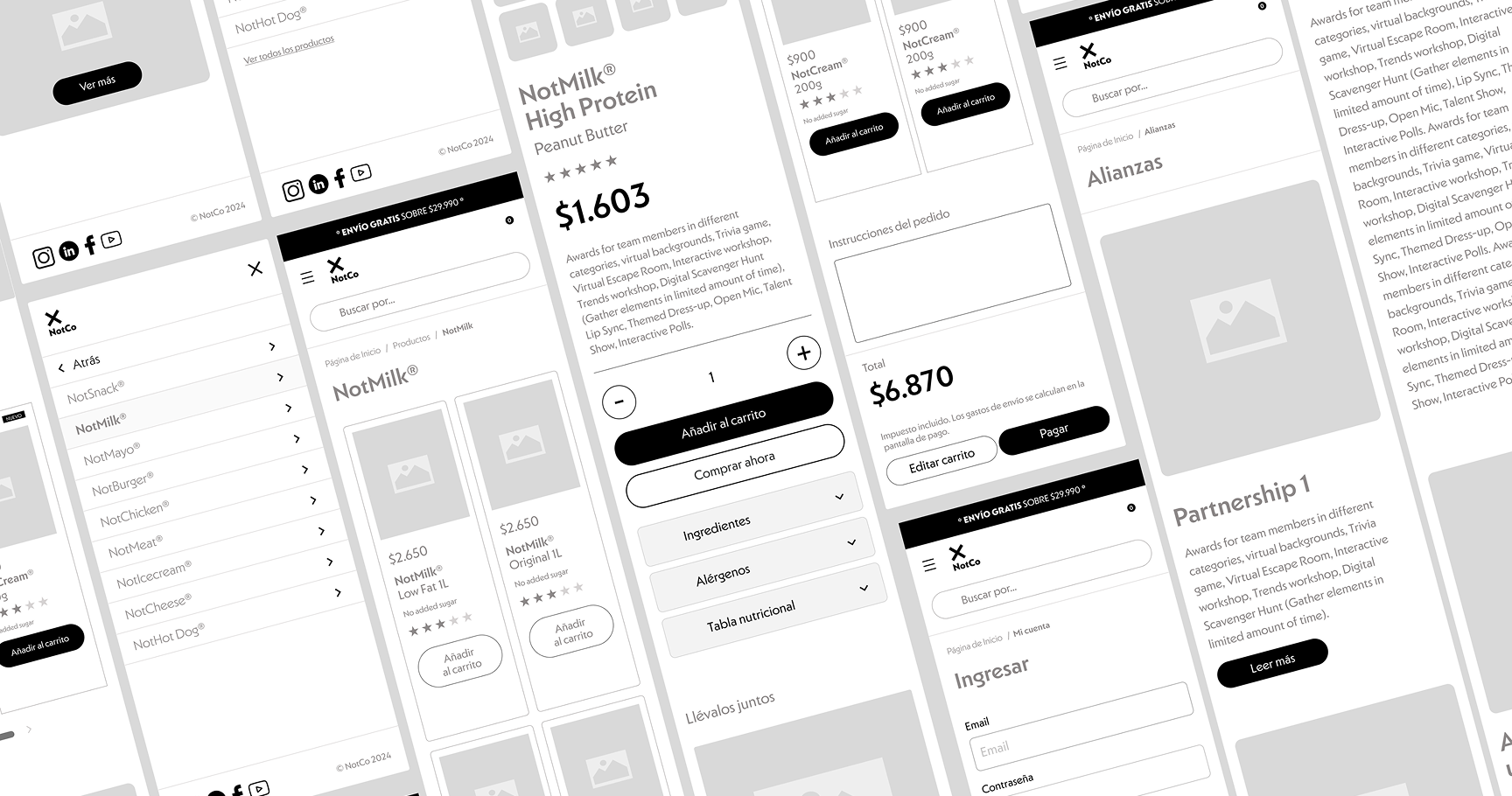
UX of the ecommerce site

Trade-offs & Reflection

Building a foundation for iteration.


Due to timeline constraints, the focus was on launching a functional, scalable system.


Given additional time, the next phase would include structured usability testing, deeper A/B validation and enhanced filtering logic.


The redesign established a stable foundation for continuous optimization.